The One Maintenance Check That Prevents Summer Shutdowns
2026 has already delivered more days above 30°C than the whole of 1976, and the UK has recorded 35°C heat in May, June and July for the first time on record. For facilities managers running chillers, air conditioning and process cooling plant, that's not a weather story, it's an operational risk register item. Every summer, the same pattern repeats across UK commercial and industrial sites: ambient temperatures climb, cooling demand spikes, and chillers that ran flawlessly through spring suddenly trip out on a high head pressure fault at the worst possible moment.
The good news is that this failure mode is almost entirely preventable, and it hinges on one chiller maintenance check more than any other: the condenser and refrigerant charge inspection. Get this right before peak season and you remove the single biggest driver of unplanned summer chiller downtime. Skip it, and you're gambling your cooling capacity on the hottest, highest-demand week of the year.
This guide explains what that check involves, how it works, what it costs versus what it saves, and how often it should happen, written for facilities managers, engineers and operations directors who need their cooling plant to keep running when the heat is on.
Why Do Chillers Fail in Summer?
A chiller is selected and rated against a defined set of design conditions: a target chilled water flow rate, a leaving water temperature, and a maximum design ambient temperature. Every one of those conditions gets pushed to its limit during a UK heatwave.
As ambient temperature rises, a chiller's condenser has to reject more heat into hotter air (or hotter water), which pushes up head pressure, the pressure the compressor works against to move refrigerant around the circuit. Two things make head pressure spike further than it should:
- Reduced airflow or fouling at the condenser, caused by dust, pollen, leaf debris or algae build-up that's accumulated quietly all spring
- Incorrect refrigerant charge, whether from a slow leak or historic under/over-charging, which reduces heat transfer efficiency at exactly the moment the system needs it most
When head pressure crosses the compressor's safety threshold, the chiller trips on a high-pressure fault to protect itself, and your cooling stops. This is why summer chiller failure so often looks sudden, even though the underlying cause has usually been building for months.
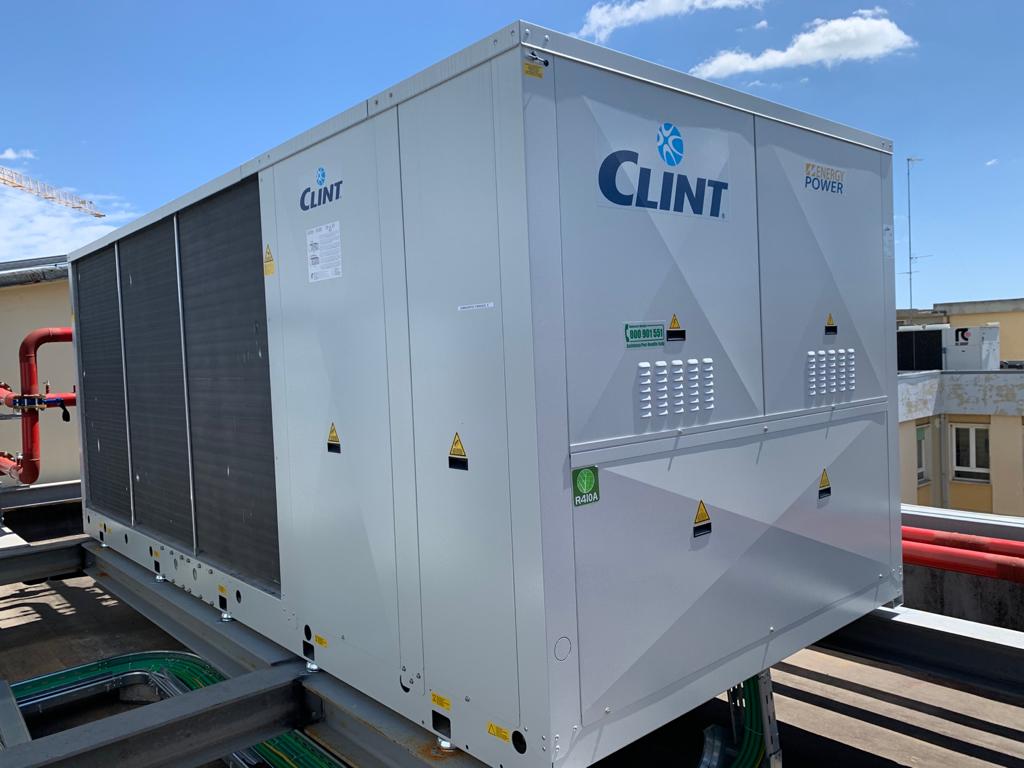
What Is the One Maintenance Check That Prevents Summer Shutdowns?
If you can only prioritise one item on your chiller maintenance checklist before summer, make it the condenser and refrigerant charge check. It combines two inspections that, together, address the root cause of the vast majority of summer trip-outs:
- Condenser coil and airflow inspection - checking for fouling, debris, corrosion and obstructed airflow paths on air-cooled units, and for scale, biofilm and fouling on water-cooled condensers and cooling towers
- Refrigerant charge verification - confirming the system is running at its correct charge weight and subcooling/superheat values, and checking for slow leaks that reduce cooling capacity under load
Both faults produce the same symptom, elevated head pressure — but they need different fixes, which is why a proper pre-summer check tests for both rather than assuming one or the other.
Why this single check matters more than any other
Every other item on a maintenance plan (electrical checks, controls calibration, water treatment) supports long-term reliability. But condenser cleanliness and refrigerant charge are the two variables most directly linked to whether a chiller can reject enough heat under peak summer ambient conditions — which is precisely the moment your cooling demand is highest and your tolerance for downtime is lowest.
How Does the Condenser and Refrigerant Check Work?
A thorough pre-summer inspection typically follows this sequence:
- Visual and physical condenser inspection — coils are checked for debris, corrosion, and airflow obstruction; fins are checked for damage that restricts airflow
- Chemical or mechanical coil cleaning — air-cooled coils are cleaned to restore full heat rejection capacity; water-cooled systems have their condenser tubes and cooling tower checked for scale and fouling
- Refrigerant pressure and temperature readings — engineers measure suction and discharge pressures, subcooling and superheat, and compare them against the manufacturer's design specification
- Leak detection — using electronic leak detectors or UV dye tracing to identify slow leaks before they become capacity-limiting or trigger an F-Gas reporting obligation
- Correction — topping up or adjusting refrigerant charge as needed, in full compliance with F-Gas Regulation requirements for handling and reporting
On instrumented or BMS-connected chillers, trend data from the preceding weeks (discharge pressure, approach temperature, compressor run hours) can flag a drifting condenser or slow leak well before a physical inspection would catch it, which is one of the reasons remote monitoring has become a standard part of Cooltherm's service and maintenance contracts.

What Is the ROI of Pre-Summer Chiller Maintenance?
The financial case for a single planned inspection versus an emergency summer breakdown is stark:
- UK and European manufacturers are projected to lose more than £80 billion in 2026 to unplanned downtime across all causes, with some sectors losing millions from a single hour of inactivity <sup>[2]</sup>
- Independent industry sources put the average cost of unplanned commercial downtime at roughly £5,000 per hour once lost production, spoiled stock, SLA penalties and emergency callout premiums are factored in
- Emergency chiller breakdown repairs typically run from a few hundred pounds for minor faults to several thousand pounds for compressor or major component failure, before accounting for the cost of the downtime itself
- By contrast, a planned condenser and refrigerant check is a scheduled, budgeted visit, carried out in normal working hours, with no premium call-out rate, no expedited parts sourcing, and no production or comfort-cooling disruption
A well-maintained industrial chiller can deliver reliable cooling for 25 years or more; a neglected one rarely makes it past 12 — a difference that dwarfs the cost of routine servicing many times over, as explored in Cooltherm's article on next-generation data centre cooling. Put simply: prevention is a scheduled line item; failure is an unbudgeted crisis.
How Often Should Chillers Be Checked Before Summer?
Timing matters as much as the check itself. Catching a fouled condenser or a slow refrigerant leak in April is routine maintenance. Catching the same fault in the middle of a July heatwave is an emergency callout.
As a general guide:
- Pre-summer condition assessment: ideally scheduled in March–April, before ambient temperatures start climbing and before cooling demand peaks
- Low-risk or standby systems: at minimum, an annual service that includes the condenser and refrigerant check
- Moderate-load commercial systems: biannual servicing, timed so one visit falls in spring
- Process-critical, high-load, or 24/7 systems (data centres, hospitals, food and pharmaceutical cold chain): quarterly servicing with continuous monitoring between visits
Under-servicing increases breakdown risk; over-servicing wastes budget without improving reliability. The right interval depends on load profile, criticality and site risk exposure, which is why Cooltherm builds every service and maintenance contract around a bespoke schedule rather than a one-size-fits-all interval.
Warning Signs You Shouldn't Wait to Investigate
Chillers rarely fail without warning — the signs are usually visible weeks or months before a shutdown, if someone is looking for them:
- Discharge or head pressure trending upward on the same load and ambient conditions compared to previous readings
- Reduced cooling capacity or leaving water temperature drifting above setpoint under normal load
- Visible debris, dust or biological fouling on condenser coils or cooling towers
- Unusual noise or vibration — on instrumented chillers, vibration trending can flag bearing wear weeks before mechanical failure
- Increasing compressor run hours to maintain the same setpoint, indicating declining efficiency
- Any refrigerant top-up in the last 12 months without an identified and repaired leak source
If any of these appear during spring servicing, treat them as a summer breakdown warning, not a minor note for the file. For a broader look at the mechanics behind these failures, see Cooltherm's detailed guide on why chillers fail under summer peak loads.
How Cooltherm Approaches Summer Chiller Reliability
Cooltherm has focused on chiller service and maintenance since the company was founded in 1992, and today maintains chillers from all the principal manufacturers across data centres, hospitals, manufacturing sites, education campuses and commercial estates. That focus shapes how a pre-summer check is delivered:
- 30+ years of chiller-specific expertise, from standard packaged units to advanced Turbocor-compressor systems
- Five regional offices and 50+ qualified engineers, giving nationwide coverage for both scheduled inspections and 24/7 emergency response
- Full F-Gas compliance built into every refrigerant check, top-up and leak report
- Cloud-based diagnostics and remote monitoring available as part of maintenance contracts, catching drift between physical visits
- Tailored maintenance schedules rather than fixed intervals, matched to each site's load profile and criticality
That approach caught a developing chiller issue at the University of Cardiff's CUBRIC building during a routine visit, resolved within five days and corrected to prevent recurrence, rather than surfacing as a mid-summer emergency. It's the same principle behind this article's core message: the check that costs a few hours of planned engineering time is the one that prevents the shutdown that costs a great deal more.
Frequently Asked Questions
What is the single most important chiller maintenance check before summer?
The condenser and refrigerant charge check. Together they address the two most common causes of high head pressure trips — fouled or obstructed condensers and incorrect refrigerant charge — which account for the majority of summer chiller shutdowns.
How do I know if my chiller's condenser is fouled?
Watch for discharge pressure trending higher than previous readings under the same load and ambient temperature, reduced cooling capacity, or visible debris on the coil. A physical inspection during a scheduled service will confirm it directly.
How much does a pre-summer chiller inspection cost compared to an emergency repair?
A planned inspection is a scheduled, budgeted visit at standard rates. Emergency breakdown repairs are typically more expensive per callout before accounting for downtime, and unplanned downtime itself is estimated to cost UK businesses in the region of £5,000 per hour.
When should chiller maintenance be scheduled to prevent summer shutdowns?
March to April, before ambient temperatures and cooling demand rise. This allows time to identify and correct any issues before peak season, rather than during it.
How often should a commercial or industrial chiller be serviced?
At minimum annually for low-risk systems, biannually for moderate-load commercial systems, and quarterly for process-critical or 24/7 environments such as data centres and hospitals, with continuous monitoring recommended between visits.
Does refrigerant leak checking fall under F-Gas Regulation requirements?
Yes. UK F-Gas Regulations require regular leak checks and reporting for systems above certain refrigerant charge thresholds. A pre-summer refrigerant check should always be carried out and documented in line with current F-Gas compliance requirements.
Protect Your Cooling Capacity Before the Next Heatwave
If your chiller hasn't had a condenser and refrigerant check since last summer, the safest assumption is that it isn't ready for peak load. Cooltherm's engineers can carry out a pre-summer condition assessment across single sites or multi-site estates, with full F-Gas-compliant reporting and a maintenance schedule built around your specific risk profile.
Talk to Cooltherm about a summer chiller inspection
or call 0117 9610006 / email info@cooltherm.co.uk to book a site assessment before demand peaks.
Related News

The Best Time to Prepare Your Chiller for Next Summer? Right Now.

Preparing Schools and Universities for Winter HVAC Demand