The £150,000 Decision Most Facilities Teams Get Wrong
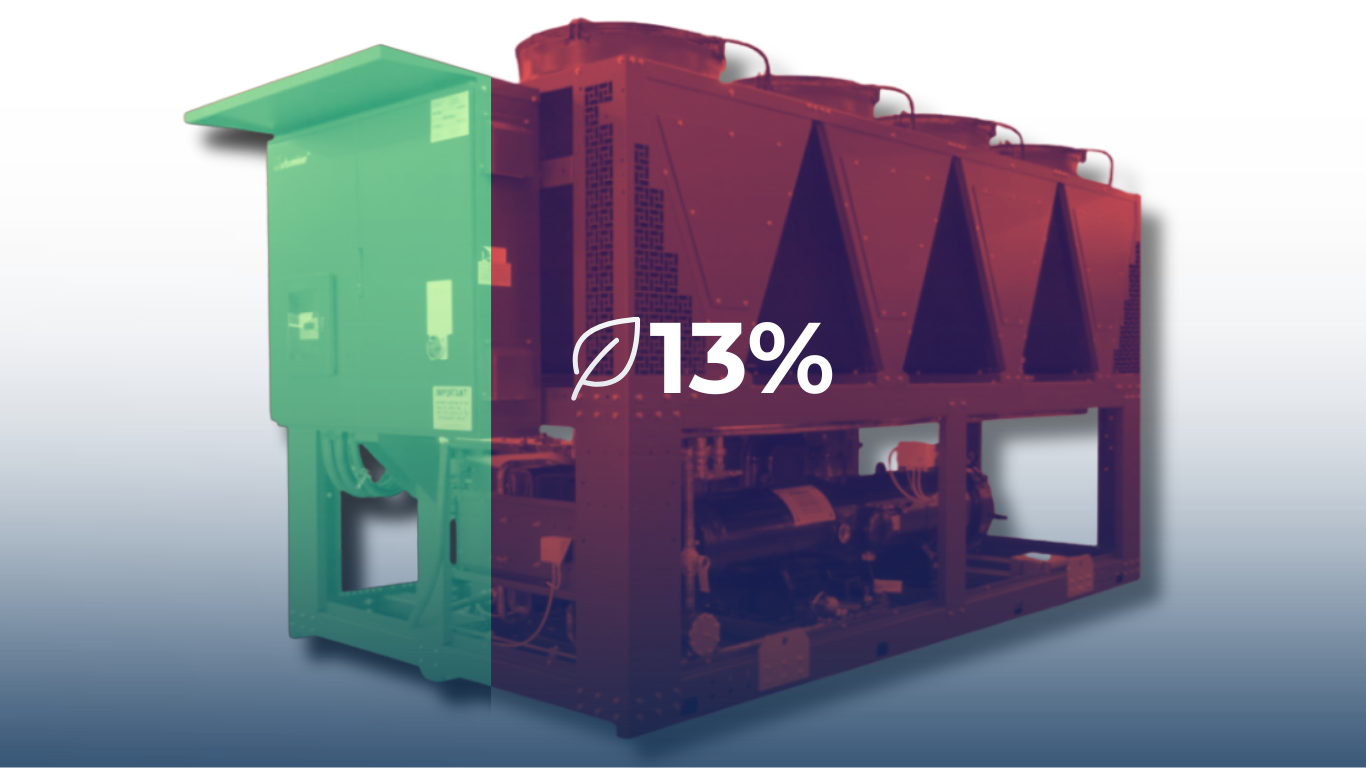
A well-maintained industrial chiller can deliver reliable cooling for 25 years or more. A neglected one rarely makes it past 12. That gap, often three to five extra years of productive service, is almost entirely down to one decision: whether facilities teams treat chiller maintenance as a scheduled investment or a reactive expense.
For plant managers, facilities directors, and engineering leads responsible for mission-critical cooling, preventative chiller maintenance is the single most effective lever for extending asset life, controlling energy spend, and avoiding the catastrophic costs of unplanned downtime. This guide explains how it works, what to prioritise, and how a structured maintenance regime can realistically add three to five years to your chiller's operating life.
Why chiller lifespan matters more than ever
Chillers are among the most capital-intensive assets in any industrial facility, data centre, hospital, or commercial building. They are also one of the largest single consumers of electricity on site. According to the U.S. Department of Energy, HVAC systems account for around 40% of commercial building energy use, and chillers typically dominate that load.
Three pressures are converging to make chiller longevity a board-level concern:
- Capital cost — Replacing a 500 kW water-cooled chiller can cost £80,000–£250,000 before installation, controls, and disruption.
- Energy and ESG targets — A chiller running at 70% of its design efficiency consumes substantially more power per kW of cooling delivered, undermining net-zero commitments.
- Refrigerant regulation — Under the UK F-Gas Regulations, high-GWP refrigerants are being phased down, making retrofits and replacements more complex and expensive.
Against this backdrop, extending chiller life through preventative maintenance isn't just a maintenance tactic, it's a financial and sustainability strategy.
How long should an industrial chiller actually last?
According to ASHRAE's equipment service life database, typical chiller service life is:
| Chiller type | Median expected service life |
| Water-cooled centrifugal | 23–25 years |
| Water-cooled reciprocating | 20 years |
| Air-cooled chillers | 15–20 years |
| Absorption chillers | 23 years |
These are median figures. In practice, Cooltherm engineers regularly encounter air-cooled units failing at 10–12 years and centrifugal units lasting beyond 30 years on identical sites. The differentiator is rarely the original manufacturer, it's the maintenance regime.
Industry benchmark: Chillers under a structured preventative maintenance contract last, on average, 3–5 years longer than equivalent units serviced reactively. (Source: ASHRAE Journal, multiple field studies.)
What is preventative chiller maintenance?
Preventative maintenance (PM) is a scheduled, condition-aware programme of inspections, cleaning, calibration, and component replacement designed to keep a chiller operating within its design parameters — before faults develop into failures.
It differs from two other common approaches:
- Reactive maintenance — Fix it when it breaks. Cheapest in the short term, most expensive over the asset's lifecycle.
- Predictive maintenance — Uses sensor data, vibration analysis, oil analysis, and analytics to predict failures before they occur. Often layered on top of preventative maintenance, not in place of it.
A best-practice regime blends both: a calendar-based PM schedule supplemented by continuous condition monitoring on critical components.
How does preventative maintenance actually extend chiller life?
There is no single mechanism. Chiller longevity is the cumulative result of many small interventions that prevent the wear pathways that kill chillers prematurely. The four big ones are:
- Heat transfer degradation — Fouled tubes force compressors to work harder, raising head pressure, oil temperature, and bearing stress.
- Refrigerant and oil contamination — Moisture, acid, and particulates accelerate corrosion of internal components.
- Electrical and control faults — Loose connections, drifting sensors, and worn contactors cause nuisance trips that, over years, stress the entire system.
- Water-side problems — Scale, biofilm, and corrosion in condenser and evaporator circuits silently destroy heat exchangers.
A well-designed preventative maintenance programme attacks all four simultaneously.
What should a chiller preventative maintenance checklist include?
A robust chiller preventative maintenance checklist is structured around frequency — daily and weekly tasks handled by on-site teams, with deeper interventions performed by specialist engineers monthly, quarterly, and annually.
Daily and weekly (in-house)
- Log entering and leaving water temperatures, pressures, and amp draws.
- Visually inspect for refrigerant or oil leaks.
- Check sight glasses for moisture or flash gas.
- Confirm control set-points and alarm history.
- Inspect cooling tower or air-cooled coils for visible debris.
Monthly
- Clean strainers on chilled and condenser water circuits.
- Inspect VSDs, starters, and panels for heat discolouration or dust.
- Test water treatment chemistry (conductivity, pH, biocide residuals).
- Verify operation of safety interlocks and flow switches.
Quarterly
- Vibration analysis on compressor and motor bearings.
- Oil sampling and laboratory analysis.
- Refrigerant leak detection (mandatory under F-Gas thresholds).
- Thermographic survey of electrical panels.
- Calibration of pressure and temperature transducers.
Annual
- Mechanical inspection of compressor — bearings, seals, valves.
- Full oil change and filter-drier replacement.
- Megger testing of motor windings.
- Cleaning of condenser and evaporator tubes (chemical or mechanical).
- Refrigerant charge verification and superheat/subcool optimisation.
- Controls firmware updates and sequence-of-operation review.
For high-criticality applications, data centres, pharmaceutical manufacturing, hospitals. Cooltherm typically recommends a customised PM schedule built around the specific failure modes of the chiller make, model, and duty profile. See our chiller maintenance services page for tailored contract options.
What is the ROI of a preventative chiller maintenance contract?
A structured PM contract typically costs 2–4% of the chiller's replacement value per year. The return comes from four sources:
- Extended asset life — Deferring a £150,000 chiller replacement by four years has a present-value benefit of tens of thousands of pounds, depending on cost of capital.
- Energy savings — Maintaining design efficiency typically saves 10–25% on chiller electricity costs.
- Avoided downtime — A single day of unplanned cooling loss in a data centre, pharmaceutical line, or hospital can cost more than a decade of PM contracts.
- Refrigerant cost avoidance — Catching leaks early avoids expensive top-ups of increasingly scarce HFC refrigerants.
For most facilities, a properly designed preventative maintenance programme pays for itself within the first year, and continues delivering value for the entire remaining life of the chiller.
What are the warning signs that a chiller needs urgent attention?
Even with a strong PM regime in place, operators should watch for these early indicators:
- Rising approach temperatures on condenser or evaporator — usually fouling.
- Increasing compressor amps at constant load — typically fouling, low charge, or mechanical wear.
- Frequent low-pressure or high-pressure trips — often refrigerant or water-flow related.
- Oil temperature creep — bearing wear, fouled oil cooler, or compressor strain.
- Unusual noises or vibration — bearing degradation or impeller imbalance.
- Sight glass bubbles after stable operation — refrigerant loss or restriction.
Cooltherm's engineering team uses BMS trend data and on-board chiller diagnostics to identify these patterns before they manifest as failures. Many of our customers move from reactive callouts to data-driven planned interventions within the first year of a maintenance contract.
Frequently asked questions
How often should an industrial chiller be serviced?
At minimum, an industrial chiller should receive a full professional service annually, with quarterly inspections and monthly checks. Critical-application chillers — data centres, hospitals, pharmaceutical sites — typically benefit from quarterly major services plus continuous remote monitoring.
Can preventative maintenance really extend chiller life by 3–5 years?
Yes. Field data from ASHRAE and multiple operators consistently shows that chillers under structured preventative maintenance contracts outlast reactively maintained equivalents by an average of three to five years, with some operators reporting even greater extensions on centrifugal units.
What is the difference between preventative and predictive chiller maintenance?
Preventative maintenance is calendar-based: scheduled inspections, cleaning, and component replacement. Predictive maintenance uses sensor data, vibration analysis, and analytics to forecast failures before they occur. Best-practice regimes combine both.
Is chiller preventative maintenance worth the cost?
For almost all commercial and industrial applications, yes. A typical PM contract costs 2–4% of replacement value per year and delivers returns through extended asset life, 10–25% lower energy consumption, reduced downtime risk, and lower refrigerant costs. Most contracts pay back within twelve months.
What happens if I skip annual chiller maintenance?
Skipping annual maintenance compounds efficiency losses (typically 5–10% per year of neglect), accelerates component wear, increases refrigerant leak risk, and voids most manufacturer warranties. Within three to five years, the chiller will typically need major intervention or premature replacement.
Does preventative maintenance reduce chiller energy bills?
Significantly. Properly maintained chillers operate within 2–3% of their design efficiency. Neglected chillers commonly run 15–30% less efficiently, directly inflating electricity costs every operating hour.
What is included in a Cooltherm chiller maintenance contract?
Cooltherm contracts are tailored to each site, but typically include: scheduled PM visits, F-Gas compliance, vibration analysis, thermographic surveys, oil and refrigerant analysis, water-side inspection, BMS integration, 24/7 emergency response, and trended performance reporting.
longevity is a choice, not an accident
Chillers don't fail because they're old. They fail because the small, accumulating issues that determine longevity — fouling, refrigerant degradation, electrical drift, water chemistry — were left unmanaged. A structured preventative maintenance programme directly addresses every one of those failure pathways, and the evidence is consistent: a well-maintained chiller will deliver three to five additional years of productive service, lower energy bills, and far fewer unplanned interventions than its reactively maintained counterpart.
For most operators, that's not a maintenance decision. It's a balance-sheet decision.
Talk to Cooltherm about extending your chiller's life
Cooltherm's specialist engineers design preventative maintenance programmes that are matched to your equipment, duty profile, and business risk. Whether you operate a single critical chiller or a national portfolio, we can help you build a programme that demonstrably extends asset life and reduces total cost of ownership.
Request a chiller maintenance assessment → Explore our case studies →
Related News

The Best Time to Prepare Your Chiller for Next Summer? Right Now.

Preparing Schools and Universities for Winter HVAC Demand